GPI International Blog: Beneath the Surface

Choosing Flat LED Panels Is Only The Start: A Textbook Case

GPI International - Wednesday, September 01, 2010
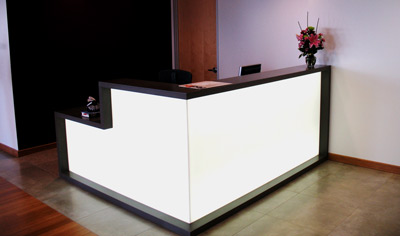
A pretty typical situation occurred here at GPI this week.  A lighting design firm had specified our Infuse™ flat LED panels for a large commercial project, and the contractor ended up making a substitution in order to try to save some money.  As it turns out, the substituted LED panel product looks absolutely terrible and the entire team, including the client, is very unhappy.  So, we received a slightly panicked email from the architect and lighting designer asking us to step in and solve the problem. 

We suspect that the substituted product was poorly made, but assuming that it wasn't, there's still a host of problems with the application.  Even if all flat LED panels are created equally, this particular LED company did not pay attention to the details, and ultimately wasted a significant amount of time and money.  The problems? Uneven illumination, panels sized incorrectly, bulky hardware that is interfering with the light, and absolutely no attention to light diffusion strategies... the textbook case for our integrated systems and process.

Budget is indeed a critical issue in building construction.  Flat LED panels are typically used in feature areas of buildings, becoming main spatial focal points that are evaluated with a discriminating eye.  So if you're looking to cut costs, it's not always wise to do so in such high-profile areas. 

The lesson here: investing more money up-front in a system from a company that will perform as you expect will help avoid costly replacements and changes down the line.  Many of our designers, especially our repeat clients, realize this value, but it can be difficult to communicate this seemingly intangible value to their clients.  What strategies do you use to convince building owners to invest in high-end products?

Backlit Onyx Panels- Yes, It's Real Stone!

GPI International - Tuesday, August 17, 2010

A sampling of the backlit onyx slabs we displayed at Neocon in Chicago this past June- if only we had a dime for every time we heard "is that real stone?". 100% natural!

Part 5 (Final) of An Exploration of Color: Countless Choices for Backlit Onyx Design

GPI International - Wednesday, August 11, 2010

We've enjoyed sharing our image library with you. Here is a recap of the main color ranges we explored:

1. Green onyx panels

2. Red onyx panels

3. Honey onyx panels

4. White onyx panels

For everything in between, there's always alternative stone types (such as blue marble), color filters, and man-made agglomerates to achieve the exact hue you're searching for!

Part 3 of An Exploration of Color: Countless Choices for Backlit Onyx Design

GPI International - Friday, August 06, 2010

Honey onyx is easily the most popular stone for interior backlit features. And when most designers use the term “honey onyx”, they are referring to a very typical stone as shown below:


Did you know that yellow and gold onyx is available in many variations? From cloudlike formations to strong linear veining, honey onyx stone panels are particularly inviting when backlit with our warm white LED panels. Here are just a few types of onyx available in honey and gold shades:

The warm glow of backlit honey onyx is quite complementary to dark wood surfaces, making it an ideal stone for use in rich commercial lobby spaces and cozy residential environments.

Part 2 of An Exploration of Color: Countless Choices for Backlit Onyx Design

GPI International - Tuesday, August 03, 2010

As we continue to spark your imaginations with stone slab images from our photo library, today we explore backlit red onyx.

From pale pinks interlaced with ivory to blood red interspersed with clear crystal, red onyx is the most ephemeral stone.

On the softer side, pink and peach toned clouds float among ivory, giving the stone a dreamy air. With the appropriate backlighting strategy, these stone panels take on a soft glow that brings out the detail in the lighter portions of the slab.


When sharper, deeper reds are used with clearly defined crystals, the stone erupts into an explosion of color and beauty.  When deep red onyx is backlit, the individual crystals are further emphasized and the color contrast intensifies.

Which color palettes do you most often use in commercial design? Continue to stay tuned for more inspiration!

Part 1 of An Exploration of Color: Countless Choices for Backlit Onyx Design

GPI International - Friday, July 30, 2010
For many, the word “onyx” evokes images of shiny black beads embedded in jewelry.  Yet as interesting as light-up gemstone necklaces sound, GPI Design creates features with a different sort of onyx, a sort of “jewelry for your walls”.  The world of onyx natural stone is a large one, filled with many colors, banding, and stone patterns.  Many people aren't aware of the enormous amount of onyx varieties available, so we're opening up our image library of slabs to set your imaginations running wild.

What exactly is onyx? In the commercial stone world, onyx is not a color or specific stone, it encompasses a broad range of stones. Onyx is a form of quartz.  Quartz is the second most abundant mineral in Earth’s crust and comes in many different varieties, one of which is onyx.  But wait a minute, you might be asking: “isn’t quartz the stone that comes in large crystals?”.  Yes, those large chunks of crystal are known as macrocrystalline quartz.  The other major category of quartz is microcrystalline (or cryptocrystalline).  

Onyx is a form of cryptocrystalline quartz, which means that is composed of large bunches of much smaller quartz crystals. It’s the combination of tens of thousands of smaller quartz crystals that give onyx its huge variety of colors, textures, and patterns.  If you look closely at a slab of onyx, you can start to see the individual crystals that make it up. Particularly when backlit, the fine detail in an onyx panel is further revealed. 

backlit green onyx panel'
Above Left: Green Onyx, unlit    Above Right: Green Onyx, backlit

Green Onyx- Rich layers of green are enhanced by billowing clouds of red and brown.  Green onyx has a luxurious, rich look, and is often used to create a sense of magnificence and warmth. Backlighting green onyx panels brings out hidden details and adds an additional layer of richness to the stone.

Now that you know the world is your oyster when it comes to designing with backlit onyx, unleash your most colorful imagination! Stay tuned for our next featured stone.

7 Reasons Why Flat LED Lighting Panels Are Imperfect Products: Part 2- Solutions

GPI International - Monday, July 19, 2010
The last post on "Beneath the Surface" discussed some of the challenges that flat LED panels pose when used for backlighting applications.  This post address each point with a design-driven solution. Anything we're missing?  Leave a comment and we will address it with another blog post!

1. Hot spots

Depending on the translucency of the surface being backlit, hot spots along the edges of LED panels are often a major design concern.  You can accommodate this setback by burying the hot spot in structural framing, or increasing the space between the backlit surface and the LED panel to diffuse the hot spot.

2. Difficult to determine how many edges to run LEDs across

This is a tough one- since most LED panels are custom produced to size, it just takes experience and experimentation to know how many edges require light sources.

3. Cold spots

Consider the ideal size of the panels; although many manufacturers can produce flat LED panels in 4’ x 8’ sheets, it can be beneficial to break that module down into smaller panels.  A good rule of thumb is to allow each LED string to throw light 15” – 20” across the face of the panel.  So, if your panel is over 20” wide, consider running strings on two parallel sides. 

4. Expensive

LED panels have higher upfront costs, but can have dramatic energy savings, especially when the LED lighting system is controllable.  By using flat LED panels in applications for which they are best suited (feature areas which require evenly illuminated surfaces and when you have limited space in which to throw light), you can preserve your client’s budget and make the most impact where needed.

5. Imperfections in acrylic batches

Tight quality control standards will ease this challenge.  Unfortunately, designers don’t have much control over this part of the production process, so be sure to choose a manufacturer that you trust and that has strong attention to detail.

6. Powering every single panel with an adapter

Specify a complete LED backlighting system that has power supplies that can run at least 50 linear feet of LED strings.  Running an entire backlit wall or ceiling back to a central power source results in more efficient wiring and installation.

7. Panels have varying brightness

Balance out the brightness among panels by specifying dimming packs that can control each LED string and each panel individually.  If a small panel appears brighter, or a panel closer to natural sunlight appears dimmer, you can control the brightness of the panels via a manual user interface or through a central building management system.

Have you experienced any of the above issues?  How did you design around those product limitations?  Now that you know a bit more about flat LED panels, enjoy designing your next unique backlit feature!

7 Reasons Why Flat LED Lighting Panels Are Imperfect Products

GPI International - Wednesday, July 14, 2010

Flat LED panels are new technology, and if you’re a designer or architect you are probably aware of a handful of manufacturers that produce these products.  And while many of the physical characteristics of LED panels are the same across the board, the majority of manufacturers lack the expertise to implement the panels with actual surfaces in actual construction environments. Here are some considerations when specifying flat LED panels for commercial projects:

 1. Hot spots


Edge lit LED panels are manufactured by embedding energy-efficient, high output LEDs along the edges of a thin acrylic panel.  Laser-etched channels distribute light across the face of the panel.  There is often a bright line at the edge of the panel where the actual light source is located.  This bright line can transfer through the surface being backlit, disrupting the visual continuity of the surface.

2. Difficult to determine how many edges to run LEDs across

If engineered incorrectly, too many LED strings will result in bright panels with excessive hot spots at the edges.  Too few LED strings will cause cold spots at the unlit edges and possibly towards the center of the panel.

3. Cold spots

If panels are sized incorrectly or LED strings run on the wrong sides of the panel, the light source may not sufficiently transfer across the entire face of the panel, resulting in cold spots towards the center of the panel.

4. Expensive

The up-front cost of LED technology is expensive, and it can be difficult for architects and interior designers to convince clients to invest in high-end products.

5. Imperfections in acrylic batches

Acrylic production results in slight variations between batches; this is very typical for the acrylic industry, but when you add light to the mix, the imperfections are exaggerated.

6. Powering every single panel with an adapter


Not a problem if you’re designing a backlit bartop for a residence, but when designing large commercial features, plugging each individual panel into an outlet is inefficient (and quite ridiculous, if you ask us!).

7. Varying panel sizes have varying brightness

Depending on the proportion of the panels (long rectangles or even squares), smaller LED panels will appear brighter than larger panels.  This is due to light bouncing in a decreased area, and also because of the voltage drop that occurs over the longer LED strands.

One of the elements of being a great designer is knowing the limitations of the product you’re investing in.  Stay tuned for the next blog article which will outline how to design around the above challenges.

Great Conversations at Neocon 2010

GPI International - Sunday, June 20, 2010
Thank you to all those who visited the GPI Design/Marlite booth at Neocon 2010 in Chicago.  Aside from getting many project leads, it was truly rewarding to see the excitement and positive feedback from those who are just learning about us for the first time.  Some memorable quotes from our booth visitors:

"I've been walking around getting all these great creative ideas but not sure how to bring it all together. This is so great!"

"Is that stone real?!"

"Your stones are like using mother nature as art pieces."

"I'd like to use this on my next project, my client wants me to 'pimp his space'!"

"What a great idea! How did you invent this system?" To which we explained that we didn't stumble into this business overnight, we evolved from standard natural stone supply to exotic stone supply to complete integrated systems of surface, structure, and light.

And... the greatest finale was getting a hug and a knuckle pound from two very excited designers who were drawn into our booth just before we began disassembly!

If you missed the show or are back at your office needing inspiration, here is a photographic recap:


Thanks to all of our booth visitors for their positive energy and engaging conversations. See you next year!


Project in Progress: Backlit Glass Panels at AED Idea Center

GPI International - Tuesday, June 01, 2010

Project Update: LED Panels Wired and Installed, Glass is Evenly Backlit


Backlit Glass Columns by GPI | AED Idea Center | Washington, D.C.

Architect: Studio 27 Architecture

Lighting Designer: MCLA

Application: Backlit frosted glass at eight columns

Products: Frosted glass panels, GPI LED Panels at 3500 K, GPI Custom Dimming Packs that communicate with Lutron 5000 Graphic Eye

Integration: Diffuser films to hide lamp image and disguise hot spots, GPI Dimming Packs to balance brightness between large and small panels

Above image indicates construction progress from the field.  Check back for completed photographs when the dimming interface and surrounding finishes are complete!