GPI International Blog: Beneath the Surface

Backlit Onyx Panels- Yes, It's Real Stone!

GPI International - Tuesday, August 17, 2010

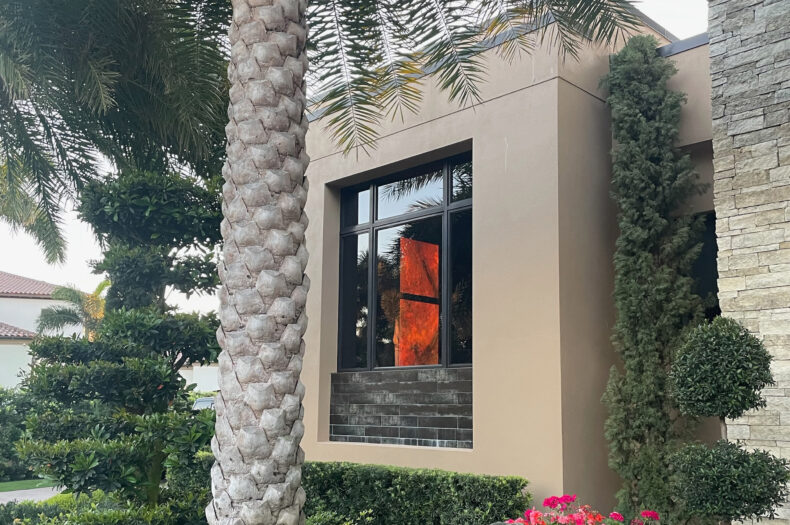
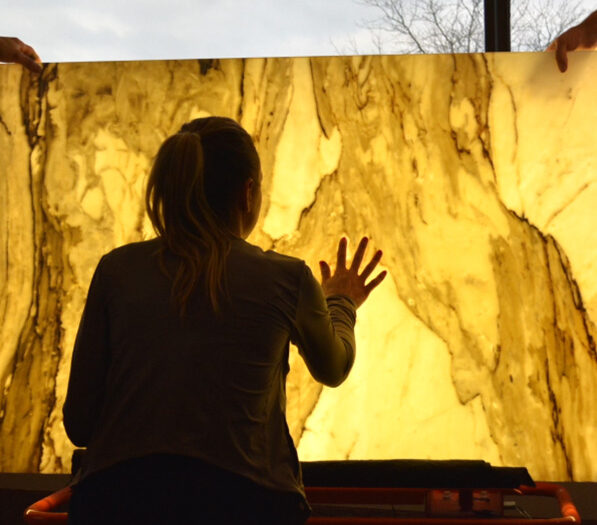
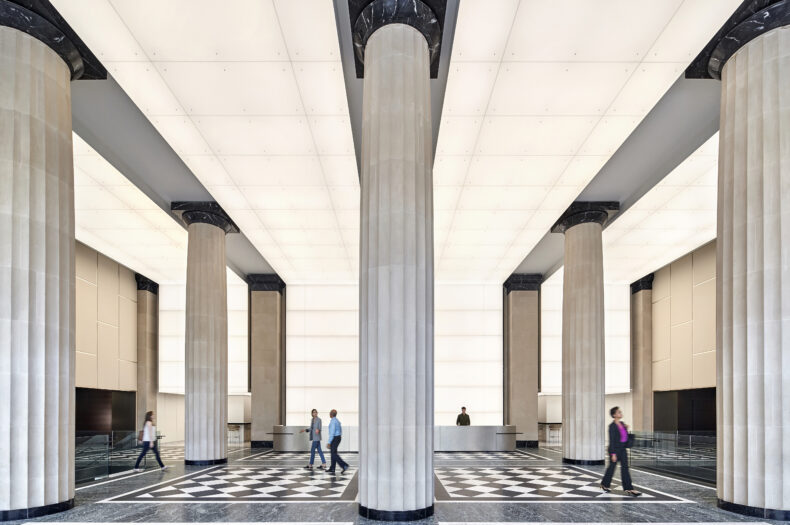
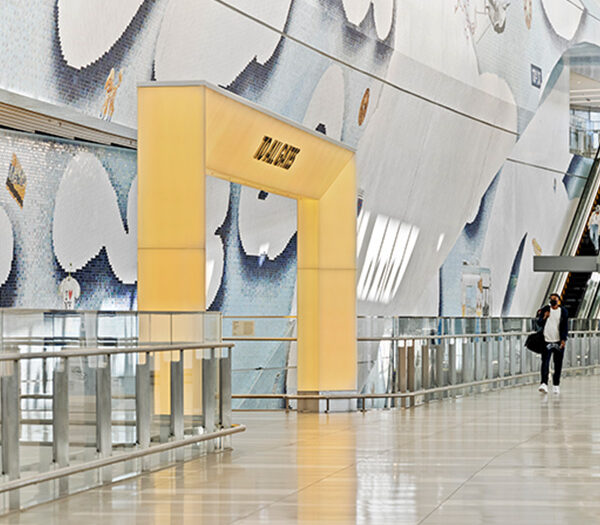
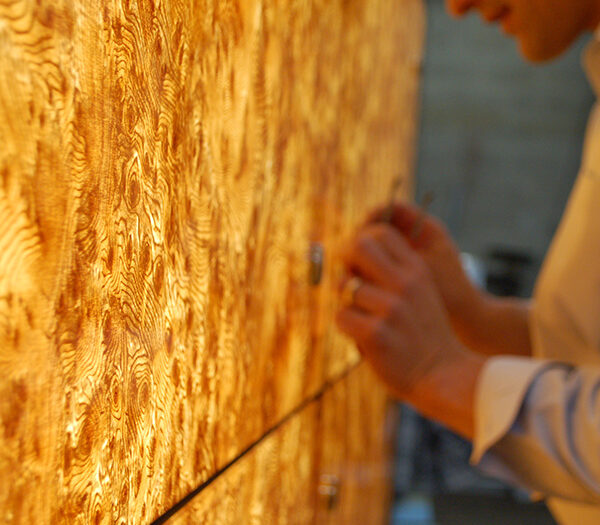
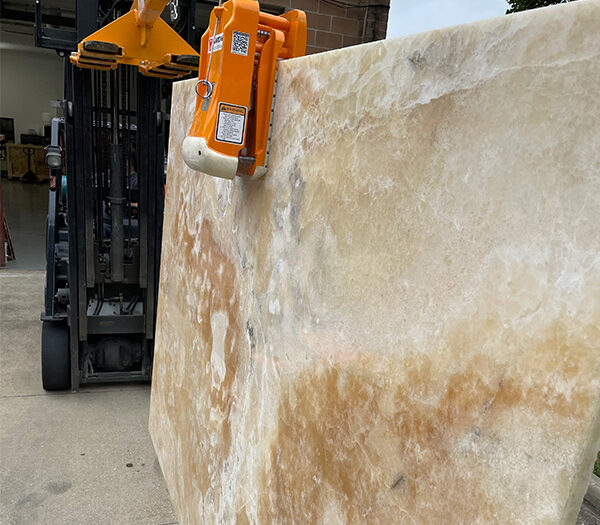
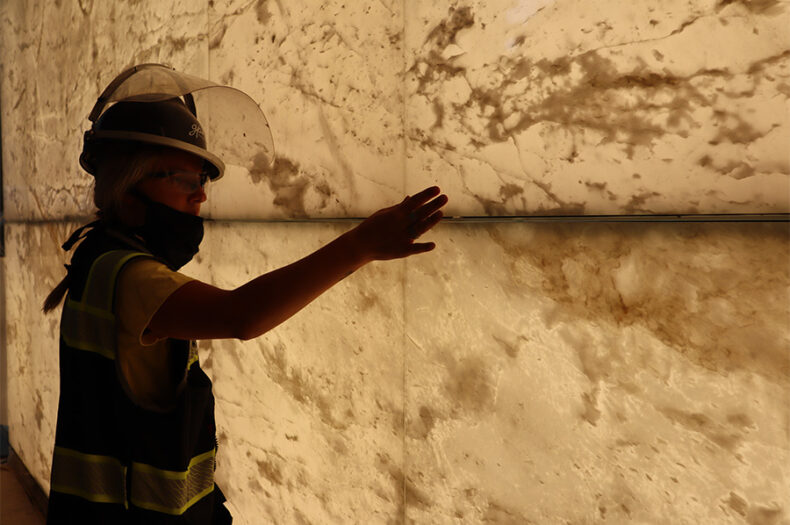
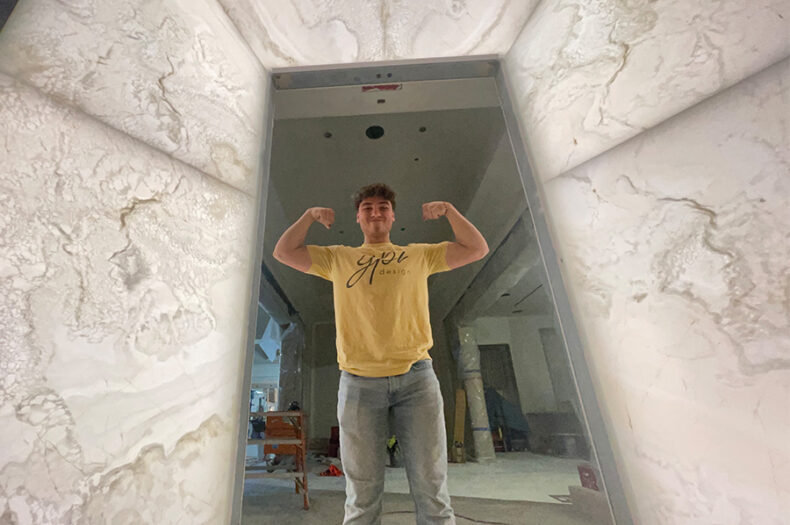
A sampling of the backlit onyx slabs we displayed at Neocon in Chicago this past June- if only we had a dime for every time we heard "is that real stone?". 100% natural!

Part 5 (Final) of An Exploration of Color: Countless Choices for Backlit Onyx Design

GPI International - Wednesday, August 11, 2010

We've enjoyed sharing our image library with you. Here is a recap of the main color ranges we explored:

1. Green onyx panels

2. Red onyx panels

3. Honey onyx panels

4. White onyx panels

For everything in between, there's always alternative stone types (such as blue marble), color filters, and man-made agglomerates to achieve the exact hue you're searching for!

Part 4 of An Exploration of Color: Countless Choices for Backlit Onyx Design

GPI International - Tuesday, August 10, 2010

So Cool: White Onyx

Admittedly, sometimes when clients request white onyx slabs that have little to no color or texture, we wonder "why don't you just paint the wall white or use an acrylic surface?". But there's something to be said for a sleek white slab that has cloudy layers that drift beneath the surface or distinctive sharp veins that form artistic compositions when bookmatched.

Backlit white onyx is a popular interior material, particularly in projects that are located in warm climate zones. (Think the Middle East, American South and American Southwest). The sleek nature of the stone surface visually represents coolness, and because our flat LED panels generate virtually no heat, the stone panels stay cool to the touch!

How do climate and context affect your color and material choices?

Part 3 of An Exploration of Color: Countless Choices for Backlit Onyx Design

GPI International - Friday, August 06, 2010

Honey onyx is easily the most popular stone for interior backlit features. And when most designers use the term “honey onyx”, they are referring to a very typical stone as shown below:


Did you know that yellow and gold onyx is available in many variations? From cloudlike formations to strong linear veining, honey onyx stone panels are particularly inviting when backlit with our warm white LED panels. Here are just a few types of onyx available in honey and gold shades:

The warm glow of backlit honey onyx is quite complementary to dark wood surfaces, making it an ideal stone for use in rich commercial lobby spaces and cozy residential environments.

Part 2 of An Exploration of Color: Countless Choices for Backlit Onyx Design

GPI International - Tuesday, August 03, 2010

As we continue to spark your imaginations with stone slab images from our photo library, today we explore backlit red onyx.

From pale pinks interlaced with ivory to blood red interspersed with clear crystal, red onyx is the most ephemeral stone.

On the softer side, pink and peach toned clouds float among ivory, giving the stone a dreamy air. With the appropriate backlighting strategy, these stone panels take on a soft glow that brings out the detail in the lighter portions of the slab.


When sharper, deeper reds are used with clearly defined crystals, the stone erupts into an explosion of color and beauty.  When deep red onyx is backlit, the individual crystals are further emphasized and the color contrast intensifies.

Which color palettes do you most often use in commercial design? Continue to stay tuned for more inspiration!

Part 1 of An Exploration of Color: Countless Choices for Backlit Onyx Design

GPI International - Friday, July 30, 2010
For many, the word “onyx” evokes images of shiny black beads embedded in jewelry.  Yet as interesting as light-up gemstone necklaces sound, GPI Design creates features with a different sort of onyx, a sort of “jewelry for your walls”.  The world of onyx natural stone is a large one, filled with many colors, banding, and stone patterns.  Many people aren't aware of the enormous amount of onyx varieties available, so we're opening up our image library of slabs to set your imaginations running wild.

What exactly is onyx? In the commercial stone world, onyx is not a color or specific stone, it encompasses a broad range of stones. Onyx is a form of quartz.  Quartz is the second most abundant mineral in Earth’s crust and comes in many different varieties, one of which is onyx.  But wait a minute, you might be asking: “isn’t quartz the stone that comes in large crystals?”.  Yes, those large chunks of crystal are known as macrocrystalline quartz.  The other major category of quartz is microcrystalline (or cryptocrystalline).  

Onyx is a form of cryptocrystalline quartz, which means that is composed of large bunches of much smaller quartz crystals. It’s the combination of tens of thousands of smaller quartz crystals that give onyx its huge variety of colors, textures, and patterns.  If you look closely at a slab of onyx, you can start to see the individual crystals that make it up. Particularly when backlit, the fine detail in an onyx panel is further revealed. 

backlit green onyx panel'
Above Left: Green Onyx, unlit    Above Right: Green Onyx, backlit

Green Onyx- Rich layers of green are enhanced by billowing clouds of red and brown.  Green onyx has a luxurious, rich look, and is often used to create a sense of magnificence and warmth. Backlighting green onyx panels brings out hidden details and adds an additional layer of richness to the stone.

Now that you know the world is your oyster when it comes to designing with backlit onyx, unleash your most colorful imagination! Stay tuned for our next featured stone.

5 Tips for Designing with Backlit Onyx

GPI International - Tuesday, April 20, 2010

Onyx itself is a luxurious material, and when integrated with the proper backlighting techniques the layers and depth of the stone is further brought to life.  You’re investing money and design time into this natural product, so consider the following tips to properly showcase its natural beauty:

1. Choose a stone that has significant visible veining or texture- the natural color and movement will distinguish the high-end natural stone finish from a man-made alternative.


(above image: Maker's Mark backlit onyx bar in Indianapolis by GPI Design)

2. White onyx is the least forgiving stone for backlighting applications.  Backlit white onyx is prone to hot and cold spots, so allow more space between the stone and the lighting source or consider using diffusion scrims and filters.

3. When designing with standard dimensional stone panels, ensure that the light source is bright enough to transfer through the stone surface.

4. When designing with glass-backed stone panels, ensure that the glass is non-leaded.  Leaded glass casts a greenish tint and can alter the color of the natural stone surface.

5. When designing a ceiling or wall layout of backlit onyx panels, consider the book matching composition and how the seams will interact with the natural veining of the stone. (Read our previous blog post on book matching natural stone for more details.)

Designing with light and natural stone comes with its own set of limitations, so take time to mock-up the stone and light assemblies or choose a company with experience in integrating the two products.

Open Pages: Why You Should Judge a Stone Composition By Its Cover

GPI International - Monday, March 29, 2010

With precise attention to book-matching, designing with natural stone can result in striking compositions.

Are you familiar with the old adage “measure twice, cut once”? To obtain perfect veining patterns in our stone feature walls, at GPI it’s more like “measure twice. draw a diagram. step back and think about it. call the design department. then cut”.


(Photograph courtesy danielpermanetter via Flickr Creative Commons)

Book-matching is a reflection of stone veining patterns across a joint so that adjacent panels appear as “mirror images”. Think of an open book: the left page is one panel, the right page is another, and the spine of the book is the joint. Book-match patterns are most commonly found in wood veneers, but the same principles apply to dimensional stone and stone veneer as well. Other variations of matching patterns include: blend match, slip match, and diamond match.

The quality of book-matching can make or break that uninterrupted wall of backlit stone that you have envisioned. Disregard the continuity between panels, and you risk having skewed veining patterns that appear to shift and jump as they move across joints. This uncontrolled use of natural stone gives the appearance of a defect or installation error, so care must be taken in the manufacturing and installation process to ensure quality control. Many natural stone panels are pre-fabricated and cut to size, making on-site adjustments costly and time-consuming.


(Above image: Book match/diamond match seams at GPI's Signature Place project)

Because stone possesses movement and graining sculpted by natural processes, each slab is unique. The visual prominence of bookmatching depends on the veining characteristics and color variations of that particular stone in use. The sharp red veins of a stark white onyx are emphasized by precise mirroring (see above photograph), while a more uniformly colored stone surface will have less pronounced book-matching.

To ensure quality book matching, care must be taken when choosing a stone manufacturer. Fluid communication between the sales, design and manufacturing departments is truly the only way to ensure attention to detail. A responsible stone company will have the insight, experience, and quality control standards to achieve those tight seams. Unfortunately, with many typical stone manufacturers, pertinent information is lost as a project moves from stone tickets into production. Make sure to detail your stone wall elevations and call out the particular seams which should be book matched. You've gone to painstaking measures to detail your prominent stone feature, so take a few minutes to ensure that you nail the details.

From the Field: Wells Fargo Lobby Installation

GPI International - Tuesday, March 23, 2010
A photo update of our installation progress on-site in Norfolk, Virginia (see the Wells Fargo project rendering for the final vision). Most of the steel has been installed and a few FLAT-Lite™ LED panels were tested.  Everything fit together perfectly and it looks like the columns will be installed tomorrow.


The reception wall (above) had some framing adjustments, which pushed back the column installation.  Steel and LED panels for reception wall will be going up today, translucent stone panels tomorrow.


All of the DURA-Lite™ panels are prepped, mechanical fasteners are aligned and secured, ready for installation.


Framing out the square lobby columns (above) in preparation for hanging our stone panels. 


All of Terry's precise work and attention to detail in the framing systems and it's soon going to be covered up with the stunning Mercury onyx panels! Check back soon for even more progress on the finish surfaces and lighting systems.

Backlit Honey Onyx: Representation of Hearth?

GPI International - Tuesday, March 16, 2010

 “the solar-heating functions of a building were essentially a replacement of the original thermal functions of the fireplace.  With its circle of warmth, the fireplace had once been the center of family life… what were the qualities of the hearth that made it so wonderful and so beloved?” – Thermal Delight in Architecture by Lisa Heschong

Honey onyx is probably the most common natural stone that’s specified into our projects. And while we’re always open to utilizing our more exotic shades of onyx or agglomerate stone, there’s definitely a reason why honey onyx is so popular as an interior material.  Honey onyx, particularly when backlit, emits a warm glow reminiscent of candlelight or a hearth.  Is it the appearance of the stone surface itself, the manner in which it refracts light, or some element in our collective unconscious that makes the warm-colored stone evoke deep-rooted emotion?

Psychologist Carl Jung outlined several archetypes, common representations of qualitative images that transcend culture and space.  While a central fireplace or hearth is not one of them, it is that exact collective unconscious that allows the concepts to appeal to designers, homeowners, building owners, and users of space.

Many interiors employ honey onyx walls for central spaces.  In the Tower Oaks high-rise office project, the freestanding honey onyx feature wall stands in the heart of the lobby as a main visual feature. 

 But the wall does not flicker like candlelight or emit heat like a fireplace.  The building HVAC itself tempers the thermal environment, while the wall is merely a visual representation of that physical and comforting warmth.  Why do we rely on advanced technological processes to replicate something as primitive as fire or candlelight?  With advanced materials and technology, are we at risk of eliminating the hearth altogether?  

Such icons as the fireplace are derived from regional climates and the way in which buildings adapt to them, so I’d be interested to hear from designers in other areas of the world on how their material selections are driven by regionalism and thermal considerations.  What do you think?